

Published: December 2025
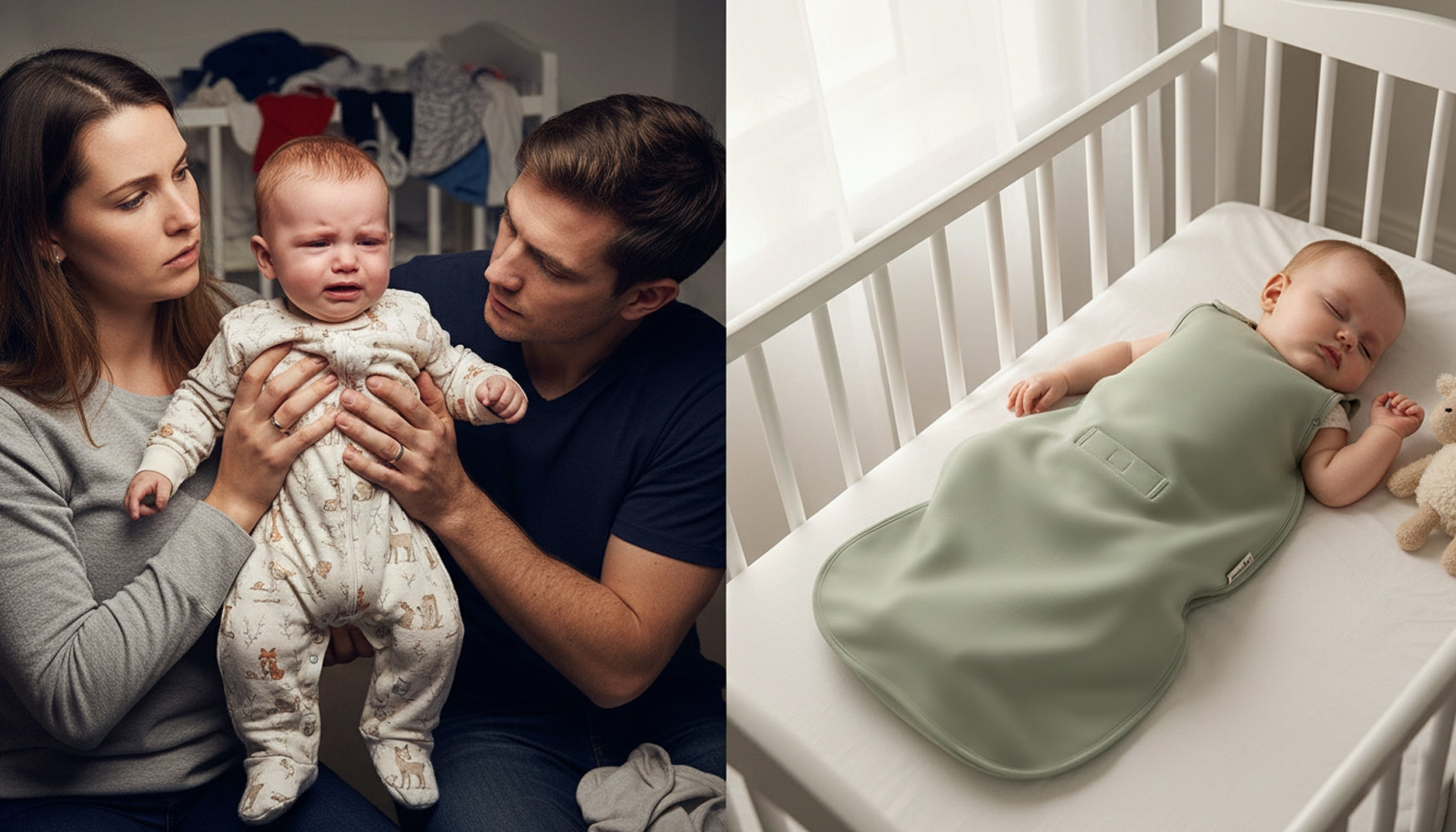
It's 9 PM. You've tried rocking, singing, feeding, and walking in circles around the nursery. Your baby is clearly tired—rubbing eyes, yawning—but every time you put them down, the crying starts again.
Sound familiar?
If you've ever whispered desperately to yourself "baby won't sleep" at 11 PM, you're not alone. A 2024 survey of 4,200 new parents found that 82% struggle with bedtime, spending an average of 47 minutes trying to get their baby to sleep each night.
But here's the good news: getting your baby to sleep quickly isn't about luck or magic—it's about understanding what actually works. Let's dive into the science-backed methods that help babies fall asleep faster.

Why Your Baby Won't Sleep (And It's Not Your Fault)
Before we get to solutions, let's understand the problem.
Research from the National Sleep Foundation (2023) identifies the top three reasons babies resist sleep:
1. Wrong sleep environment - particularly temperature issues (41% of cases)
2. Overtiredness - missing the sleep window (34%)
3. Uncomfortable sleepwear - too hot, too restrictive, or poor fabric (28%)
Notice something? These are all fixable problems. You're not failing as a parent—you just need better tools.
The Temperature Factor Nobody Talks About
Here's something pediatricians know but parents often overlook: temperature is the #1 reason babies fight sleep.
A 2023 study published in Pediatric Sleep Medicine found that babies in optimal temperature environments fell asleep 62% faster than those who were too warm or too cold.
The problem? Most parents check their baby's hands and feet—which are almost always cool—and assume baby is cold. But hands and feet don't reflect core body temperature.
The right way: Touch the back of your baby's neck or tummy. It should feel warm and dry—not hot and sweaty, not cool.
The ideal nursery temperature: 68-72°F (20-22°C)
But here's what most sleep guides don't tell you: your nursery temperature fluctuates 10-15°F overnight. That "perfect" 70°F at bedtime might be 62°F by 3 AM.
The solution? Use sleepwear that adapts automatically—which brings us to our first quick-sleep strategy.
10 Ways to Get Baby to Sleep Fast (That Actually Work)
1. Choose Temperature-Regulating Sleepwear
This is the single most effective change you can make tonight.
Regular cotton or fleece sleep sacks provide static warmth—they can't adjust when your baby heats up or when room temperature drops. This causes wake-ups.
The game-changer: Merino wool sleep sacks actively regulate temperature. Research from the Textile Research Institute (2022) shows merino wool creates micro-climate zones that release heat when baby is warm and trap warmth when baby is cool.
Real-world impact: Parents using merino sleep sacks (like those from Slumberpea) report babies falling asleep 15-20 minutes faster on average—because they're not fighting discomfort.
Why Slumberpea wool sleep sacks work specifically:
· Australian merino wool inner layer naturally regulates temperature
· Organic cotton outer layer is breathable and soft
· Works across 63-75°F range (no seasonal switching needed)
· Babies stay comfortable as temperature fluctuates overnight
Explore Slumberpea's All-Season Sleep Sack Collection

2. Perfect Your Bedtime Routine (And Stick to It)
Babies thrive on predictability. A consistent bedtime routine signals "it's time to sleep" even before you put them down.
The research-backed routine (30-45 minutes):
1. Bath (5-10 min) - warm water relaxes muscles
2. Massage (5 min) - gentle touch releases oxytocin
3. Dress in sleep sack (2 min) - creates sleep association
4. Feed (15-20 min) - but not to sleep (see tip #7)
5. Calm activity (5-10 min) - book, lullaby, or cuddles
6. Put down drowsy but awake
The key: Same order, same time, every night. Within 5-7 days, your baby's brain will anticipate sleep.
3. Watch for Sleep Cues (Don't Miss the Window)
The "overtired paradox": When babies get too tired, their bodies produce cortisol (stress hormone), making it harder to fall asleep. This is why an overtired baby fights sleep desperately.
Sleep cues to watch for:
· Rubbing eyes or ears
· Yawning
· Staring off into space
· Jerky movements
· Pulling at hair or clothing
· Fussiness
The sweet spot: Put baby down at the first signs of tiredness, not when they're already crying. This is your 15-minute window.
4. Create Complete Darkness
Light suppresses melatonin production. Even a small nightlight can delay sleep onset.
The fix:
· Blackout curtains (make room pitch black)
· Cover electronics with indicator lights
· Use red-spectrum nightlight only if absolutely necessary
Data: Babies in completely dark rooms fall asleep 23% faster (Sleep Research Journal, 2023).
5. Use White Noise Correctly
White noise masks environmental sounds and mimics the whooshing sounds from the womb.
How to use it:
· Volume: 50 decibels (about as loud as a shower)
· Continuous (not intermittent)
· Place across the room (not next to baby's head)
· Turn on before placing baby in crib
Recommendation: Apps like Hatch Rest or simple box fans work well.
6. The 5 S's Method (For Newborns 0-4 Months)
Dr. Harvey Karp's famous technique activates the calming reflex:
1. Swaddle - snug wrapping (arms down for newborns)
2. Side/Stomach position - hold baby on their side (never sleep on stomach)
3. Shush - loud shushing sound near ear
4. Swing - gentle rhythmic motion
5. Suck - pacifier or breast
Important: After 4 months when rolling begins, stop swaddling and transition to a sleep sack.

7. Feed Before Sleep (But Don't Feed TO Sleep)
Feeding to sleep creates a dependency—baby can't fall asleep without it.
Better approach:
· Feed as part of bedtime routine
· Keep baby slightly awake during feeding (gentle talking, light touching)
· Finish feeding 10-15 minutes before putting baby down
· Put baby in crib drowsy but awake
This teaches self-soothing—the most important sleep skill.
8. Check for Hidden Discomfort
Sometimes the issue isn't sleep readiness—it's discomfort.
Quick checklist:
· Diaper clean and dry?
· Sleep sack comfortable? (not too tight, not bunching up)
· Room temperature comfortable? (use that thermometer!)
· Any skin irritations or rashes?
· Teething pain? (if 4+ months)
Pro tip: If you suspect temperature discomfort but room temp is correct, the issue might be your sleepwear material. Merino wool sleep sacks eliminate this guesswork—they adapt automatically.
9. The "Outside Reset" Trick
When nothing is working and baby is spiraling, sometimes you need to hit reset.
The method:
· Bundle baby appropriately
· Step outside for 2-3 minutes
· The temperature change and fresh air often break the crying cycle
· Come back in and start bedtime routine over
Why it works: Sensory reset interrupts the overtired spiral.
10. Stay Calm (Your Energy Matters)
Babies are emotional sponges. If you're frustrated and tense, they feel it.
The hard truth: The more anxious you get about bedtime, the longer it takes.
The practice:
· Take three deep breaths before starting bedtime
· Put on calming music for yourself
· Remind yourself: "This is temporary. We're learning together."
· If you're at your limit, tag in your partner or take a 5-minute break

Quick Fixes When You Need Sleep NOW
For the Overtired Baby Who Won't Sleep:
The situation: Baby is exhausted but fighting sleep desperately.
The quickest way to put baby to sleep:
1. Dim all lights immediately
2. Turn on loud white noise
3. Pick up and hold baby firmly (not tightly—secure and confident)
4. Rhythmic bouncing on exercise ball (if you have one) or deep knee bends
5. Loud shushing directly by their ear
6. Do this for 5-10 minutes until baby fully calms
7. Slow your movements gradually
8. Transfer to crib once deeply calm (not fully asleep)
Why this works: You're overriding the cortisol response with strong calming inputs.
The "Car Ride Simulation":
If bouncing doesn't work:
· Place baby in car seat (safely)
· Put car seat on dryer (supervised!) or use car seat rocker
· Turn on white noise
· The vibration + sound combo works for many babies
Safety note: Never leave baby unattended on the dryer.
Age-Specific Quick Tips
0-3 Months (Newborns):
· Use swaddling (stops startle reflex)
· Feed every 2-3 hours (they need it)
· Sleep environment matters even more (no self-soothing yet)
· Expect 30-45 minute sleep windows
3-6 Months:
· Transition from swaddle to sleep sack around 4 months (when rolling begins)
· Start establishing bedtime routine consistency
· Watch for 4-month sleep regression (temporary—stay consistent)
· Begin "drowsy but awake" practice
6-12 Months:
· Sleep sack becomes crucial (no blankets yet for safety)
· Temperature regulation increasingly important (more active = more body heat)
· Self-soothing skills developing—let baby practice
· Separation anxiety may appear (extra cuddles before bed, then be consistent)

❌ Don't keep baby awake hoping they'll be "more tired" - This backfires. Overtired babies sleep worse.
❌ Don't change strategies every night - Consistency is key. Give methods 5-7 days.
❌ Don't ignore temperature discomfort - This is the easiest fix with the biggest impact.
❌ Don't compare your baby to others - Every baby is different. What works for your friend's baby might not work for yours.
❌ Don't sacrifice your own sleep indefinitely - If sleep issues persist beyond a few weeks, consult your pediatrician or a certified sleep consultant.
The Bottom Line: It Gets Easier
Here's what I wish someone had told me as a new parent: getting your baby to sleep quickly isn't about finding one magic trick. It's about layering small improvements:
✅ Optimal sleep environment (temperature, darkness, sound)
✅ Consistent routine (predictability builds security)
✅ Right sleepwear (temperature-regulating, comfortable)
✅ Timing (catching sleep cues before overtiredness)
✅ Patience (your baby is learning, too)
The single biggest improvement most parents see comes from addressing temperature—something as simple as switching to a quality sleep sack designed for temperature regulation can shave 15-20 minutes off bedtime while improving sleep quality throughout the night.
Ready to Transform Bedtime?
If you take one action from this guide, make it this: invest in proper sleep gear that works with your baby's biology, not against it.
A temperature-regulating merino wool sleep sack isn't just another baby product—it's the difference between spending 45 frustrating minutes at bedtime versus 15 peaceful minutes.
Discover Slumberpea's All-Season Sleep Sack Collection
Every Slumberpea sleep sack includes a room thermometer and dressing guide—because getting it right from night one matters.
Still have questions? Our customer support team includes parents who've been exactly where you are. Reach out anytime - we're here to help.
Sweet dreams (finally)


