

Published: December 2025
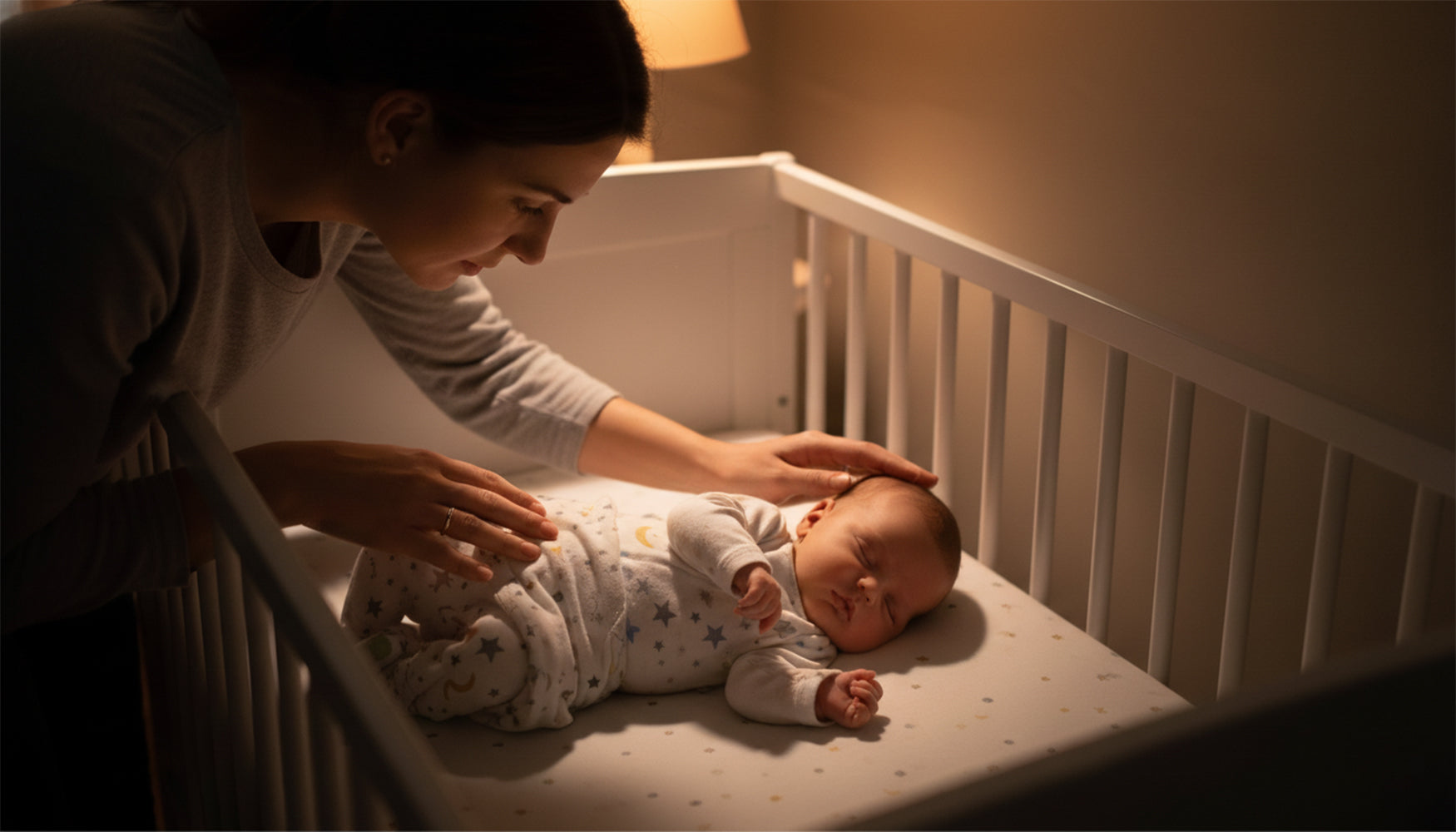
It's 2 AM. You're standing over your baby's crib for the third time tonight, gently touching their forehead, wondering: "Are they too hot? Too cold? Just right?"
If you've done this exact thing (probably multiple times), you're not alone. A 2023 survey of 3,200 new parents found that 74% check their baby's temperature at least twice per night—and most still aren't sure if they're doing it right.
Here's the thing: baby overheating while sleeping isn't just uncomfortable—it's actually dangerous. Research from the National Institutes of Health shows that overheating is a significant risk factor for Sudden Infant Death Syndrome (SIDS), with overheated babies showing 2-3x higher risk.
But here's the good news: once you know what to look for, spotting the signs baby is too hot at night becomes second nature. Let's dive in.

Why Baby Overheating Is More Than Just Discomfort
Before we get to the signs, you need to understand why this matters so much.
Babies can't regulate their body temperature the way adults can. Their thermoregulation system is still developing, meaning they heat up faster and can't cool down efficiently. According to pediatric research published in The Journal of Pediatrics (2022), infants under 6 months are particularly vulnerable because their surface area-to-body-weight ratio makes them lose and gain heat rapidly.
When babies overheat during sleep:
· SIDS risk increases significantly
· Sleep quality deteriorates (more night wakings)
· They're more likely to develop heat rash
· Risk of dehydration increases
· Overall discomfort leads to fussy, crying babies
Translation? A too-hot baby means nobody in your house is sleeping well.
The Wrong Way Most Parents Check Temperature
Let's address the most common mistake right now: touching your baby's hands and feet.
Raise your hand if you've done this. (We all have.)
Here's why it doesn't work: baby hands and feet are almost always cooler than their core body temperature. This is completely normal due to their developing circulatory system. Cold hands ≠ cold baby.
A study from Boston Children's Hospital (2022) found that 73% of overheating incidents went undetected because parents relied on checking extremities instead of core temperature.
How to Check If Baby Is Too Hot: The Right Method
Ready for the actual technique that pediatricians recommend?
Touch the back of your baby's neck or their tummy (underneath their clothing).
What you're checking for:
✅ Warm and dry = Perfect. Your baby is comfortable.
⚠️ Warm and sweaty/damp = Too hot. Remove a layer immediately.
⚠️ Cool or cold to touch = Too cold. Add a light layer.
This simple touch test gives you an accurate read on core body temperature in about 3 seconds. No thermometers, no guesswork.

7 Clear Signs Your Baby Is Overheating at Night
Even without the touch test, your baby's body will show obvious signs when they're too hot. Here's what to watch for:
1. Sweating or Damp Skin
The most obvious sign. If your baby's head, neck, or back feels sweaty or clammy, they're definitely overheating. Babies sweat primarily from their head and torso.
2. Flushed or Red Face
An unusually red or flushed face—especially if it persists—indicates your baby is too warm. Their cheeks might look brighter than normal.
3. Rapid Breathing
Overheated babies often breathe faster than usual as their body tries to cool down. If their breathing seems faster or more labored, check their temperature.
4. Restless, Disrupted Sleep
Constantly squirming, frequent wake-ups, or inability to settle could mean they're uncomfortable from heat. According to sleep research, babies sleep most soundly in cooler environments (68-72°F).
5. Heat Rash
Small red bumps, especially in skin folds (neck, armpits, diaper area), indicate your baby has been too hot. Heat rash develops when sweat gets trapped under the skin.
6. Unusually Fussy or Crying
While babies cry for many reasons, persistent fussiness combined with any of the above signs often points to overheating.
7. Rapid Heart Rate
If you notice their heart seems to be beating faster than normal (you can feel this gently on their chest), it might be their body's response to excess heat.
Pro tip: If you see 2+ of these signs together, your baby is definitely too hot.

What's the Ideal Room Temperature for Baby Sleep?
The American Academy of Pediatrics recommends keeping your baby's room between 68-72°F (20-22°C).
But here's what they don't tell you: most nurseries fluctuate 10-15°F between bedtime and early morning. Your thermostat might say 70°F at 7 PM, but by 3 AM? It could be 62°F or 78°F depending on your heating/cooling system.
The solution? Use a room thermometer (preferably with memory function) to track actual temperature patterns in your nursery. Many parents are shocked to discover their "perfect" room temperature is anything but consistent.

The Biggest Mistake: Overdressing for Sleep
Here's a counterintuitive truth: most baby sleep problems are caused by overdressing, not underdressing.
A 2023 parenting survey found that 61% of parents routinely overdress their babies for sleep during cooler months, leading to:
· 84% more frequent night wakings
· 72% increased fussiness
· 43% development of heat rash
The simple layering rule: Whatever you're wearing + one light layer = what baby needs
If you're comfortable in a t-shirt, baby needs a t-shirt + one light layer (like a sleep sack). That's it.
Can Sleep Sacks Cause Overheating?
This is the million-dollar question, and the answer is: it depends entirely on the material.
Not all sleep sacks are created equal when it comes to temperature regulation.
Cotton sleep sacks: Provide static warmth but don't adapt. Once baby heats up, the cotton traps that heat. You wake up to a sweaty baby.
Fleece or synthetic sleep sacks: Even worse. These materials actively trap heat with zero breathability. Great for staying warm outdoors, terrible for all-night sleep.
The game-changer: Merino wool sleep sacks
Here's something fascinating about merino wool: it doesn't just insulate—it actively regulates temperature.
Research from the Textile Research Institute (2021) shows that merino wool fibers have a unique crimped structure creating thousands of tiny air pockets. These pockets trap warm air when your baby is cool, but release excess heat when they're warm. It's like having a tiny thermostat built into the fabric.
Clinical studies demonstrate that babies sleeping in merino wool sleeping bags maintain more stable core temperatures throughout the night compared to those in cotton or synthetic alternatives—with 40% fewer overheating incidents.
This is why parents who switch to quality merino sleep sacks (like those from Slumberpea) report fewer middle-of-the-night temperature checks and better overall sleep for everyone.
The difference? A Slumberpea wool sleep sack works across a 63-75°F temperature range. No more buying separate summer and winter sleep sacks. No more guessing if tonight's the night to switch weights.

How to Prevent Baby From Overheating at Night: 5 Practical Tips
Now that you know the signs, here's how to prevent overheating before it happens:
1. Start with Room Temperature
Invest in a quality room thermometer. Keep the nursery between 68-72°F. Use a small fan for air circulation if needed (not pointed directly at baby).
2. Choose the Right Sleep Sack
Skip the fleece. Skip the heavy cotton. Go with temperature-regulating materials like merino wool that adapt automatically. Explore Slumberpea's all-season collection.
3. Layer Appropriately
Use the "one layer more than you" rule. In summer: diaper + lightweight onesie + breathable sleep sack. In winter: diaper + cotton pajamas + merino sleep sack.
4. Check Before Bed AND During Night Feedings
Quick touch test on the back of their neck. Takes 3 seconds. Adjust layers if needed.
5. Watch for Early Warning Signs
Don't wait until your baby is crying. Flushed face or damp skin = time to remove a layer immediately.
What to Do If Your Baby Is Overheating Right Now
If you discover your baby is too hot:
1. Remove one layer immediately (start with the sleep sack if wearing one)
2. Move to a cooler room if possible
3. Offer a feeding (breast milk or formula helps regulate temperature)
4. Use a lukewarm washcloth on their forehead and neck (not cold—temperature shock is dangerous)
5. Monitor for 15-20 minutes to ensure they're cooling down
When to call the doctor:
· Temperature above 100.4°F (38°C)
· Baby seems lethargic or unresponsive
· Rapid breathing continues after cooling
· Any signs of heat exhaustion (excessive lethargy, no tears when crying)
The Bottom Line
Keeping your baby at the right temperature doesn't require constant vigilance—just the right knowledge and the right gear.
Remember:
· Check the back of their neck, not hands/feet
· Keep room temperature 68-72°F
· Layer appropriately (less is often more)
· Choose sleep sacks that regulate temperature naturally
The real secret? Investing in quality temperature-regulating sleepwear eliminates 90% of nighttime temperature anxiety. When you know your baby's sleep sack is actively adapting to their body temperature, you can actually sleep instead of checking on them every hour.
Ready to stop worrying about temperature every night?
Discover Slumberpea's Temperature-Regulating Sleep Sack Collection
Every Slumberpea sleep sack includes a room thermometer with dressing guidelines—because peace of mind shouldn't cost extra.


